

A guide to strengthening your direct distribution strategy
4 profiles, 4 ways to book. What this means for your hotel website and strategy.
Why your guests are not all the same
Demographic segmentation (age, occupation, nationality) no longer explains much about booking behaviour. What sets your guests apart is their relationship with risk, their tolerance for effort, and what they need to validate before paying.
For years, the hotel industry has thought in terms of channels: OTA versus direct, mobile versus desktop, last-minute versus advance booking. But the real driver of conversion is not the channel; it is the psychology behind the click. A traveller booking in a hurry on a Sunday evening and an obsessive comparison-shopper can both start their search on Google, then land on your website with completely different expectations.
This guide summarises the findings of an exploratory qualitative survey conducted by the D-EDGE Product Team among hotel guests: 82 respondents, combined with conversion data available across the sector.
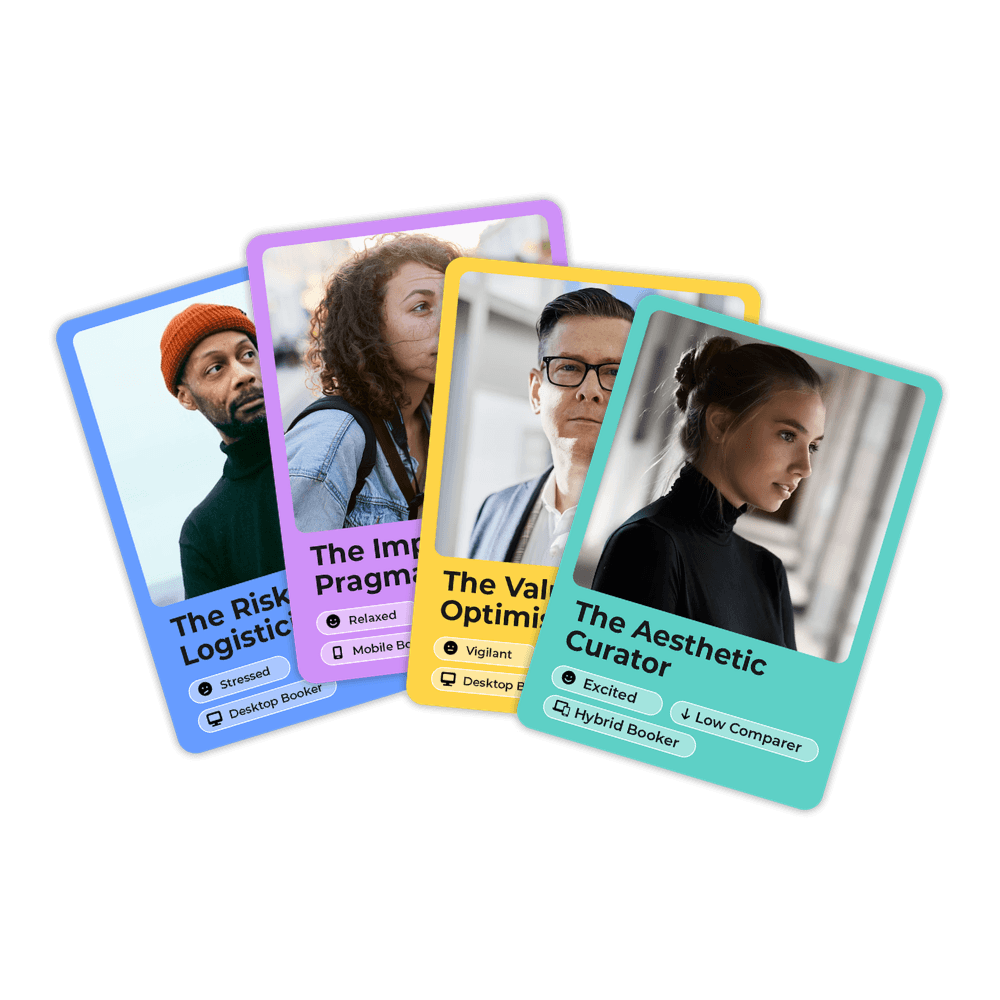
Key takeaway: Four major behavioural profiles emerge from this study: four Traveller Archetypes. Understanding their expectations and needs can transform your direct distribution strategy and conversion.
of travellers start their search on an OTA or Google Maps
more conversions when the direct site displays a clear price advantage
of mobile bookings abandoned when the journey takes more than 3 minutes
Test your hotel's readiness for the 4 traveller archetypes
📌 Scope of the survey: the first booking. These archetypes describe the behaviour of a traveller booking at a hotel they do not yet know. They search, compare, validate, and can switch to an OTA at any point.
This journey is fundamentally different from that of a loyal guest, who no longer needs convincing but needs recognising. This is the whole point of a CRM strategy: turning an uncertain first-time booker into a recurring direct guest, whose acquisition cost becomes almost nil. But that is a different story.
🔑 The central finding: regardless of their profile, most travellers start their search on an OTA or Google Maps.
The hotel’s website and booking engine come into play afterwards, at the confirmation stage. The challenge, then, is to reassure in order to convert.
What we measured, and why
01. Their mindset
The emotional state the traveller is in while booking. It shapes how much reassurance, speed, or detail they expect from your booking engine before they feel comfortable paying.
02. Their preferred device
Where the traveller does most of their booking. It determines what your booking engine needs to get right first: a frictionless mobile checkout, a content-rich desktop experience, or a smooth handoff between the two.
03. Their comparison intensity
How many hotels, rates, or sources the traveller checks before committing. It tells you how much information density and reassurance your booking engine needs to offer: from a quick, low-effort choice to an exhaustive, spreadsheet-level comparison.
The universal journey: OTA first, hotel second
Regardless of their profile, travellers booking for the first time at an unfamiliar property follow an almost identical journey structure. Platforms such as Booking.com, Expedia, Agoda, and Google Hotels serve as the entry point: where they discover hotels, build their shortlist, and compare options. The hotel’s website and booking engine only come in afterwards, to confirm a choice that is already largely made, not to shape it.
According to Expedia, 4 out of 5 travellers visit an OTA at some point in their journey, even if they complete their booking elsewhere. Yet direct booking remains structurally more profitable, with an acquisition cost 5 to 8 times lower than a standard OTA commission of 15 to 25% (see the 2026 D‑EDGE study on distribution costs).
⚠️ The conversion window is narrow. Once on the booking engine, the guest has already chosen the hotel, sometimes even the room. They are in transaction mode. Every second of hesitation, every missing piece of information, every sign of technical fragility sends them back to the OTA they are familiar with.
This turning point, when the traveller leaves the OTA for the hotel’s website, is precisely where profile differences become decisive. Understanding these differences means understanding where and how your hotel website and booking engine can make a difference.
THE 4 ARCHETYPES
The four archetypes below come from our behavioural analysis centred on what the guest is trying to achieve, not on their socio-demographic characteristics. The same person can shift from one archetype to another depending on the type of trip: an Impatient pragmatist for a business trip, a Cautious planner as soon as they organise a family holiday.
Each profile indicators: 🙂 Dominant mindset ・ 💻 Preferred booking device ・ ⬆️ Intensity of comparison between offers
Archetype 1: The Impatient Pragmatist
Their mantra: minimal effort and thought
“It was a Sunday evening, I just wanted it done. I was on my sofa, watching TV, with my iPad.”
😌 Relaxed · 📱 Mobile first · ⬇️ Low comparison
How they book
- Browses and books from the sofa, on mobile, often in the evening
- Compares 2 central hotels on Google Maps within their budget
- Quickly checks room photos on the website
- Books in under a minute using autofill and Apple Pay / PayPal
What they need
- A smooth mobile journey, free of friction
- Minimal information, instant visual validation
- Express payment (wallets, one-click)
What delights them
- Personalised suggestions, with no need to compare
- Journey completed in under 90 seconds
- Zero manual input (autofill, wallet)
What drives them away
- More than 3 rooms or rates to compare
- A dense, hard-to-read interface
- Redirects, slow loading times, pop-ups
What you must provide them: Enable payment wallets (Apple Pay, PayPal) and limit the booking journey to a maximum of 3 steps.

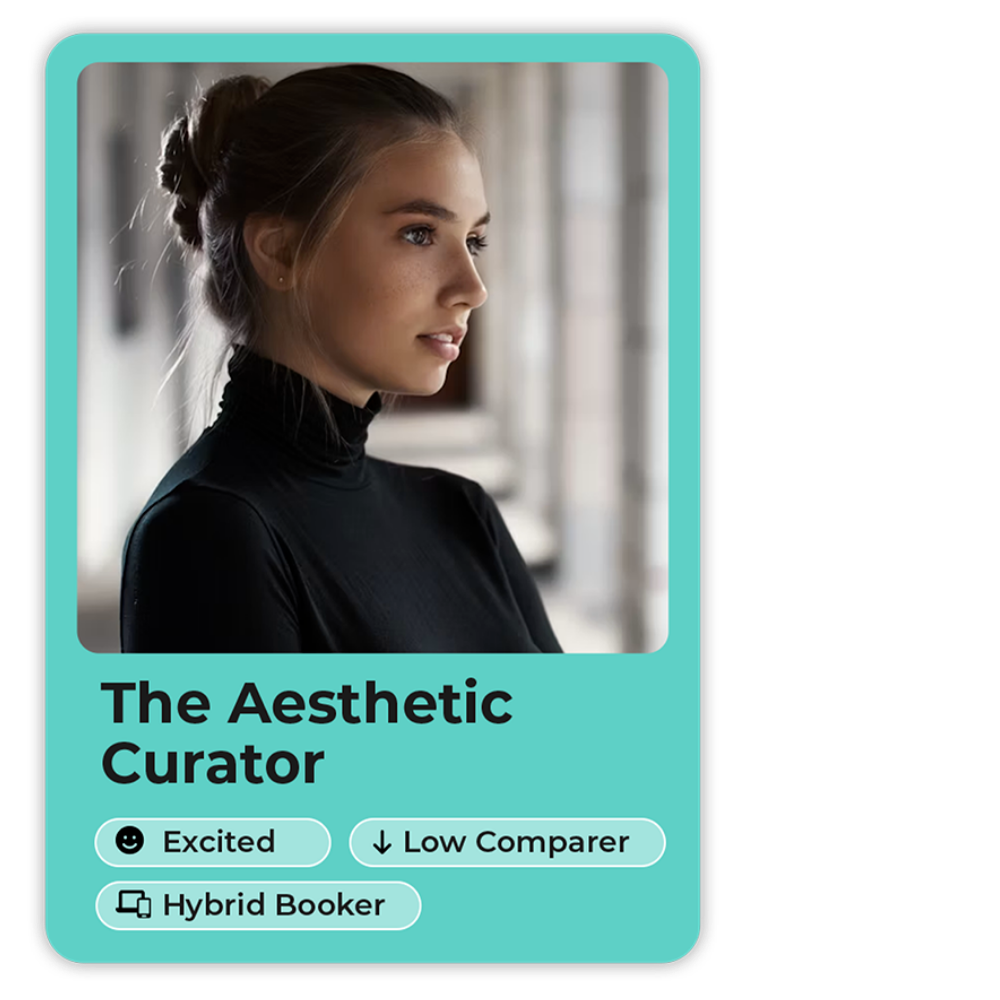
Archetype 2: The Cautious Planner
Their mantra: Fit confortably the family for a trouble-free stay
“It’s often complicated, because you never know whether your child will sleep in a folding bed, a real bed, or on a sofa…”
😰 Stressed · 💻 Desktop · ⬆️ High comparison
How they book
- Shortlists 3 to 5 hotels on OTAs based on price and convenience
- Checks Google reviews for reassurance
- Confirms practical details and room information on the hotel’s website
- Tests different occupancy configurations (family room, two rooms, cot)
- Often contacts the hotel directly to confirm details
What they need
- A clear children’s and infants’ occupancy policy
- Clear details on bedding and sleeping arrangements
- Logistics with no surprises: parking, high chair, luggage storage
What delights them
- Suggestions for family or connecting rooms
- A detailed room plan with bed sizes
- Reassurance badges (“cot included”)
What drives them away
- Unclear children’s age categories
- Vague bedding information, missing bed sizes
- Missing information that forces them to call
What you must provide them: Display the children’s policy and bed sizes directly on the room page, with no extra click required.
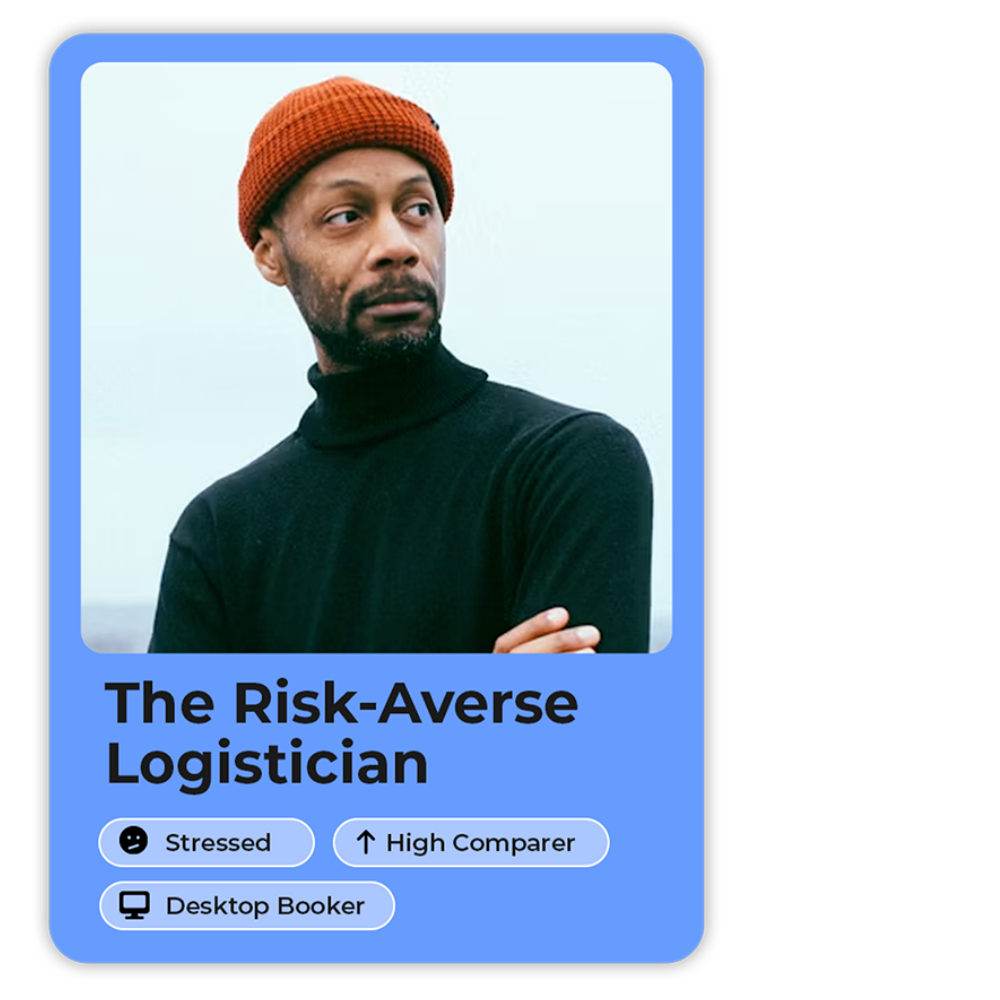
Archetype 3: The Aesthetic Curator
Their mantra: A luxurious experience with carefully curated design
“I really needed to switch off, so I chose one of the best hotels in the city with a spa, and booked a sea-facing room.”
😊 Enthusiastic · 📱+💻 Hybrid · ⬇️ Low comparison
How they book
- Shortlists 3 hotels on OTAs, based on photos, on mobile
- Switches to desktop to assess the quality of facilities on the hotel’s website
- Spends little time on the booking engine but judges its quality instantly
- Expects to book a spa treatment or other extra at the “extras” stage
What they need
- High-resolution, panoramic photo galleries
- Confirmation of their non-negotiable criteria (spa, balcony, sea view)
- The ability to book treatments within the booking engine
What delights them
- An immersive booking engine, with large photos and smooth animations
- Premium features highlighted (sea view, unlimited spa access)
- Spa packages bookable directly within the booking engine
What drives them away
- Low-resolution photos
- An unclear spa policy, forcing them to check elsewhere
- A booking engine with a “budget” look, signalling poor service
What you must provide them: Include high-resolution visuals and make premium extras bookable without leaving the booking journey.
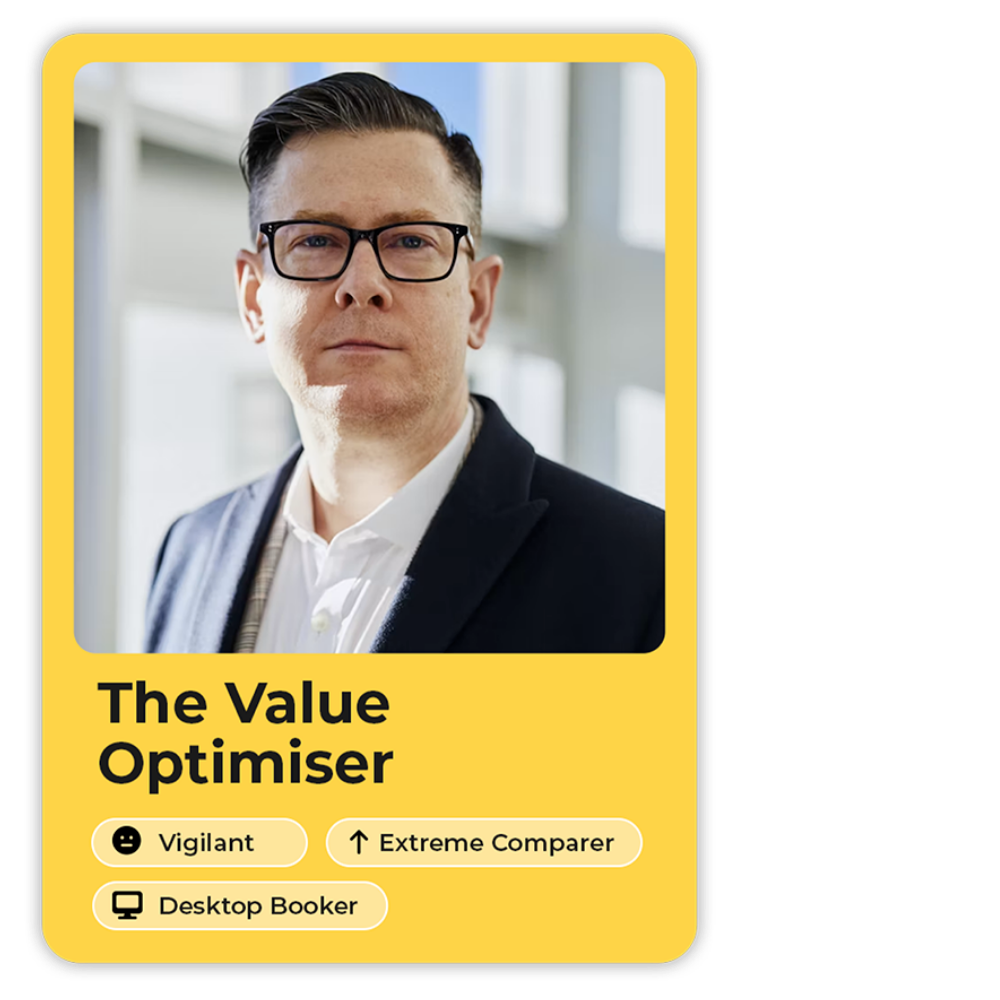
Archetype 4: The Value Optimiser
Their mantra: Secure the best possible configuration.
“I try to be a perfectionist with my budget. On certain points, like cleanliness or bed quality, I won’t compromise.”
👁️ Vigilant · 💻 Desktop · ⬆️⬆️ Extreme comparison
How they book
- Cross-checks multiple sources: OTAs, Google, social media, AI assistants such as ChatGPT
- Builds comparison tables for 5 or more options
- Scrutinises the booking engine’s offers in search of exclusive benefits
- Sometimes shifts their dates to unlock better rates or upgrades
What they need
- A high density of information (room size, bed size, detailed offers)
- A clear understanding of the added value of each offer
- A professional booking engine with reliable payment methods
What delights them
- Detailed, scannable offers that highlight the extras
- An advanced comparison view (rooms, rates, packages)
- Clearly displayed direct-booking benefits
What drives them away
- Vague descriptions of rooms, rates, and extras
- Long lists with no clear hierarchy of value
- Questionable technical signals: missing translations, a suspicious payment page, domain redirects
What you must provide them: Structure each offer around the same key points (size, bedding, inclusions) to allow for quick comparison.
Key takeaways
These four archetypes share the same starting point (the OTA) but differ sharply in what triggers conversion: speed for the pragmatist, reassurance for the planner, aesthetics for the aesthete, and information density for the optimiser. Adapting your booking engine to these four logics, rather than to a generic guest, is the most direct lever for taking back ground from OTAs.
Do you capture these 4 profiles?
The D-EDGE Distribution Platform: one partner for the full guest journey
Each archetype in this guide interacts with a different part of the booking journey. The D-EDGE platform is built to support hoteliers across the full guest journey, from the discovery stage on OTAs and metasearch, through booking on your website and booking engine, to the post-stay relationship that turns a first-time guest into a direct repeat customer.
- Discovery: visibility on metasearch and OTAs through the Connectivity Hub and Digital Media solutions
- Booking: a Central Reservation System and Booking Engine designed to convert across every traveller profile
- Post-stay: CRM tools to turn a first booking into a lasting direct relationship
One platform, one guest, one continuous experience; instead of four disconnected tools trying to catch up with four different traveller mindsets.
Need help?
Looking to optimise your direct strategy and elevate your hotel’s digital journey?